Reflective Options
Reflective TPO membranes bounce sunlight instead of absorbing it, lowering roof temperatures and cutting summer cooling costs.

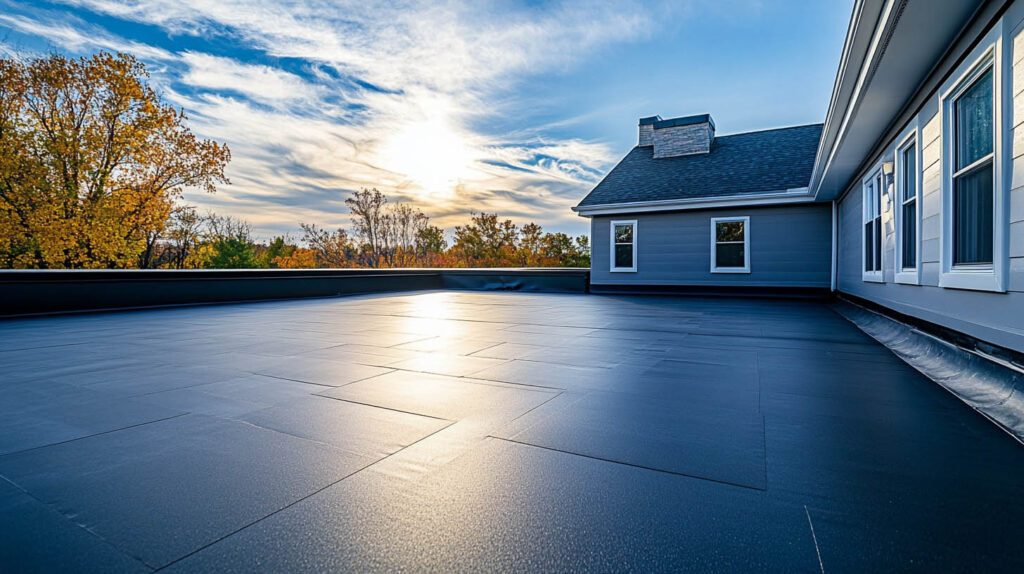
TPO single-ply membrane is the modern standard for flat and low-slope roofs — a tough, continuous surface that locks water out for decades. Built for porches, additions, and commercial buildings across North Carolina.
Shingles need slope to shed water. When a roof is flat or low-slope — a porch, an addition, a commercial building — water sits, and only a continuous membrane keeps it out. TPO is the modern answer: durable, low-seam, and watertight.
Reflective TPO membranes bounce sunlight instead of absorbing it, lowering roof temperatures and cutting summer cooling costs.
A continuous membrane in wide sheets means very few seams — and far fewer places for water to ever find its way in.
Resists UV, ozone, and weathering without cracking or drying out the way old tar and gravel roofs did. 20-30 year lifespans are standard.
Engineered specifically for flat and low-slope roofs where asphalt shingles simply can't shed water properly.
TPO delivers premium single-ply performance at a lower installed cost than most comparable membrane systems.
From warehouses and storefronts to porches, additions, and modern homes — the same proven system scales to any flat roof.
A TPO roof isn't a stack of overlapping pieces — it's a continuous membrane laid in wide sheets. Here's what makes the system watertight and why the install matters as much as the material.
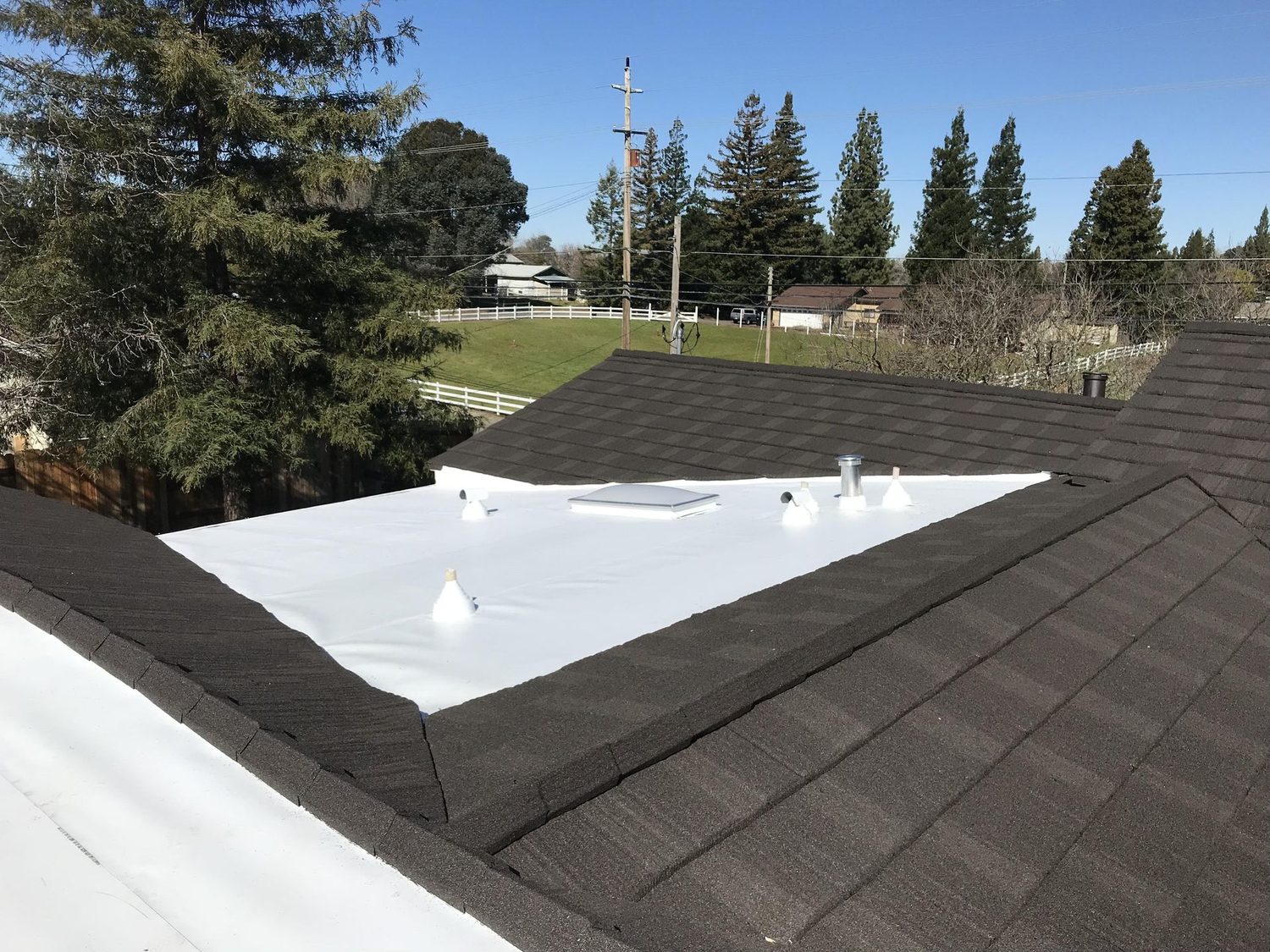
Wide sheets of TPO membrane are rolled across the prepared roof deck and either mechanically fastened or fully adhered, covering the surface as one continuous layer.
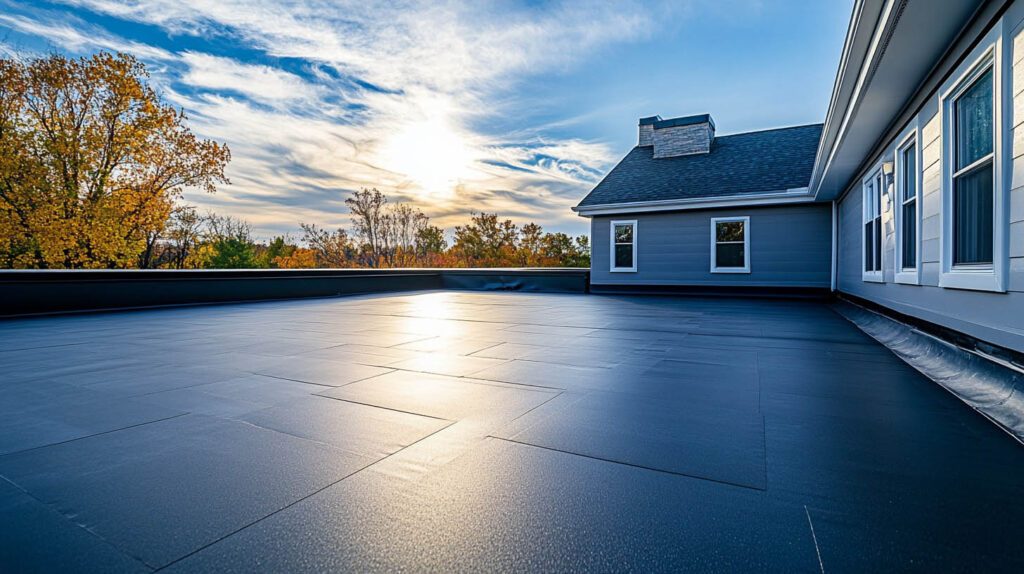
Because the membrane comes in wide sheets, the roof is covered with as few seams as possible. Fewer seams means fewer of the joints where flat roofs typically fail.
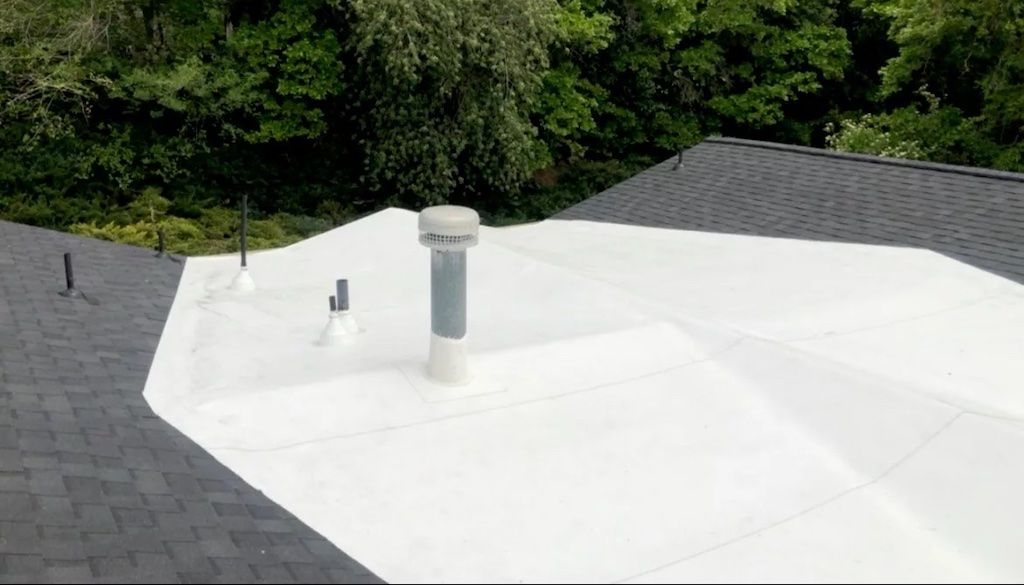
Every penetration — vents, curbs, drains, walls — is wrapped and sealed with matching TPO flashing so water has nowhere to find its way in.
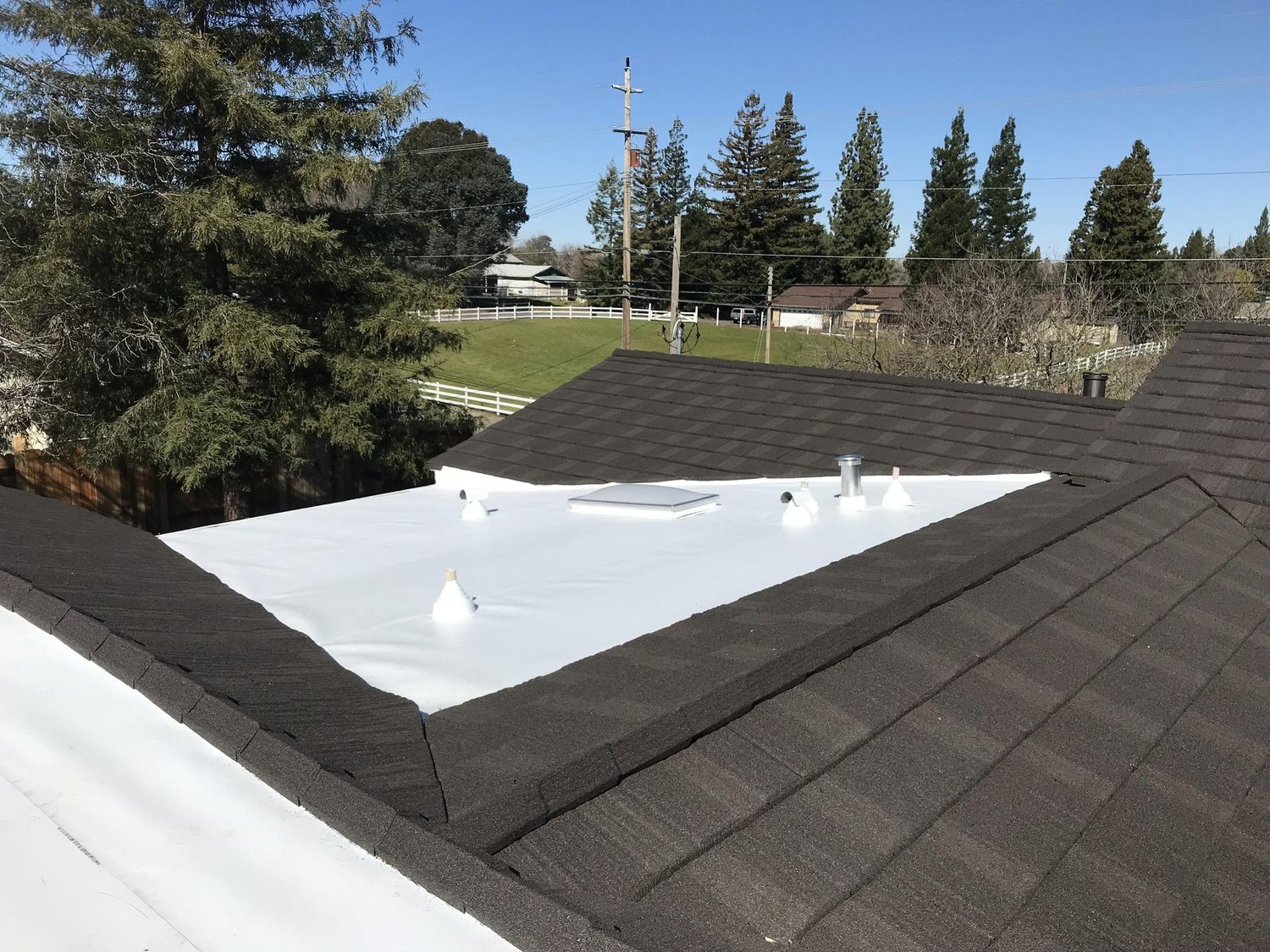
A flat roof has nowhere to hide from the North Carolina sun, and standing water after a storm is unforgiving. TPO is chosen specifically for these stresses.
TPO's UV-stable formulation holds up to NC's long, hot summers without baking, cracking, or chalking — and reflective options run cooler.
Low-slope roofs hold water after heavy rain. A continuous, low-seam membrane keeps that standing water on top of the roof, not inside it.
A reflective roof runs cooler than dark asphalt, which lowers attic temperatures and eases the strain on your AC.
Properly fastened or adhered TPO systems are engineered to resist the wind uplift that tears at flat roofs during NC storms.
How TPO compares to the other ways people cover a flat or low-slope roof.
| TPO Membrane | EPDM (Rubber) | Modified Bitumen | Built-Up (Tar & Gravel) | |
|---|---|---|---|---|
| Surface | Single-ply membrane | Black rubber | Dark asphalt | Gravel |
| Seams | Minimal (wide sheets) | Glued / taped | Overlapped | Layered |
| Reflective options | Yes | No | No | No |
| Typical lifespan | 20-30 yrs | 20-25 yrs | 15-20 yrs | 15-25 yrs |
| Leak-prone joints | Few | Possible | Possible | Many |
| Best for | Most flat roofs | Budget rubber roofs | Patch / overlay | Older systems |
Free inspection of your flat or low-slope roof, an honest assessment of what it needs, and a written estimate good for one full year. No pressure to commit on the spot.
We've received your TPO roofing request and will be in touch within one business day to schedule your inspection.